September 2, 2026
That Fake Delivery Text? AI Wrote It.
Scammers are using artificial intelligence to flood our phones with fake shipping notifications. Here's how to protect yourself.
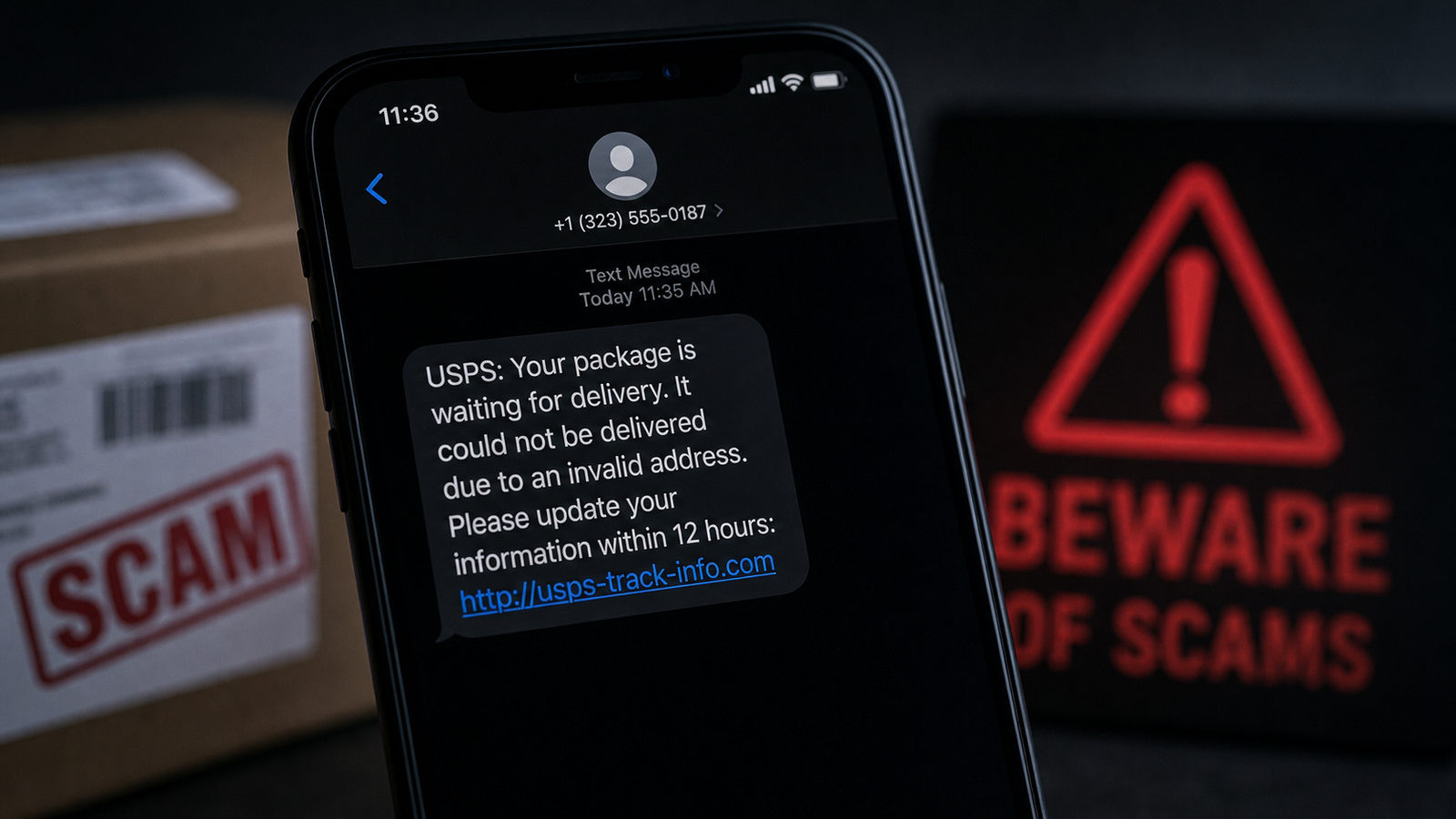
Last week a customer walked into our Radford store holding up her phone. She had a text message that looked like it came from USPS saying her package was "held at the facility" and she needed to pay a $2.99 redelivery fee. She almost clicked the link before her daughter told her to stop and check with us first.
Good thing she did. It was a scam.
And it's not just one random fake text. These things are everywhere now. If you live in the New River Valley—Radford, Pulaski, Dublin, Christiansburg, anywhere around here—you've probably gotten one yourself. A text or email pretending to be from UPS, FedEx, USPS, or DHL telling you there's a problem with a delivery and you need to click a link RIGHT NOW.
Here's what's changed: these scams aren't being typed out by some guy in a basement anymore. They're being generated by artificial intelligence.
AI Is Making Scammers Dangerously Good
A recent investigation by the Associated Press and PBS FRONTLINE revealed something most people haven't heard about yet. Massive scam operations—many of them overseas—are now using AI tools built by American tech companies to crank out personalized phishing messages at an industrial scale.
We're talking tens of thousands of targeted messages per month from a single operation. The AI writes convincing text in perfect English (or Spanish, or whatever language the target speaks), customizes details to look legitimate, and even generates fake tracking numbers and official-looking carrier logos.
According to the investigation, these operations have extracted tens of millions of dollars from victims. And the people running them are using American internet infrastructure—including satellite internet services—to stay connected and keep the scam factories running around the clock.
The old advice of "look for bad grammar and typos" doesn't work anymore. AI-generated scam messages often look better than the real ones.
What the Fake Shipping Messages Look Like
Here are the most common ones we hear about from customers at both our Radford and Pulaski locations:
- •"Your package is being held." You get a text saying USPS or UPS is holding your package and you need to pay a small fee ($1.99, $2.99, etc.) to release it. The link goes to a fake website that steals your credit card number.
- •"Delivery failed—update your address." An email with a FedEx or UPS logo asks you to "confirm" your address. The form collects your full name, address, phone number, and sometimes your Social Security number.
- •"Your package is out for delivery—track here." The tracking link installs malware on your phone or sends you to a phishing site that looks exactly like the real carrier's website.
- •"Customs fee required." A message claiming your international shipment is held at customs and you owe a fee. They want payment by gift card or cryptocurrency—a dead giveaway.
These messages used to be easy to spot. Now, thanks to AI, they're polished, professional, and timed to arrive when you're actually expecting a package.
Why the New River Valley Is a Target
You might think scammers only go after people in big cities. That's not true at all. Rural areas and small towns like ours are actually prime targets because:
- •We order a lot online. When the nearest big-box store is a drive away, Amazon and online shopping fill the gap. More packages means more opportunities for a fake "delivery problem" text to seem real.
- •Scammers don't discriminate by ZIP code. These AI systems blast out messages to every phone number and email address they can scrape. Radford's 24141 and Pulaski's 24301 are in the hopper just like everywhere else.
- •Trust in familiar brands. When you see the USPS or UPS logo, your guard drops. Scammers know that.
How to Protect Yourself
We deal with USPS, UPS, FedEx, and DHL every single day at both of our stores. Here's what we can tell you from experience:
- •No carrier will ever text you asking for payment to release a package. If USPS is holding something, they leave a physical notice in your mailbox or at your door. Period.
- •Never click a link in an unexpected text about a delivery. If you're expecting a package, go directly to the carrier's website (usps.com, ups.com, fedex.com) and type your tracking number in yourself.
- •Check the sender's email address. Real emails from UPS come from @ups.com, not @ups-delivery-notice-38291.com. Same for every other carrier.
- •If a message creates urgency or panic, that's the scam talking. "Act within 24 hours or your package will be returned!" is designed to make you click before you think.
- •When in doubt, call us or bring it in. We're happy to look at a suspicious message and tell you if it's real. We see this stuff constantly.
What to Do If You Already Clicked
Don't panic, but act fast:
- •If you entered payment info: Call your bank or credit card company immediately and report the charge as fraud. They can freeze the card and issue a new one.
- •If you entered personal info: Consider placing a fraud alert on your credit reports through Equifax, Experian, or TransUnion. It's free.
- •If you clicked a link on your phone: Run a security scan if you have antivirus software. Watch for apps you didn't install or unusual behavior.
- •Report the scam: Forward suspicious texts to 7726 (SPAM). Report phishing emails to reportphishing@apwg.org. You can also file a complaint with the FTC at reportfraud.ftc.gov.
The Bottom Line
The scammers have upgraded their tools. AI lets them pump out millions of perfect-looking fake delivery messages without breaking a sweat. American technology and infrastructure are being used against American consumers, and right now there aren't enough regulations to stop it.
But you don't have to be a victim. The best defense is simply slowing down. Don't click. Don't pay. Don't panic. Go directly to the carrier's real website, or just walk into our store on East Main Street in Radford or Pulaski and ask us.
We'd rather spend five minutes looking at a suspicious text with you than see you lose money to some AI-powered scam factory on the other side of the world.